

Lantana, Two-Toned
India
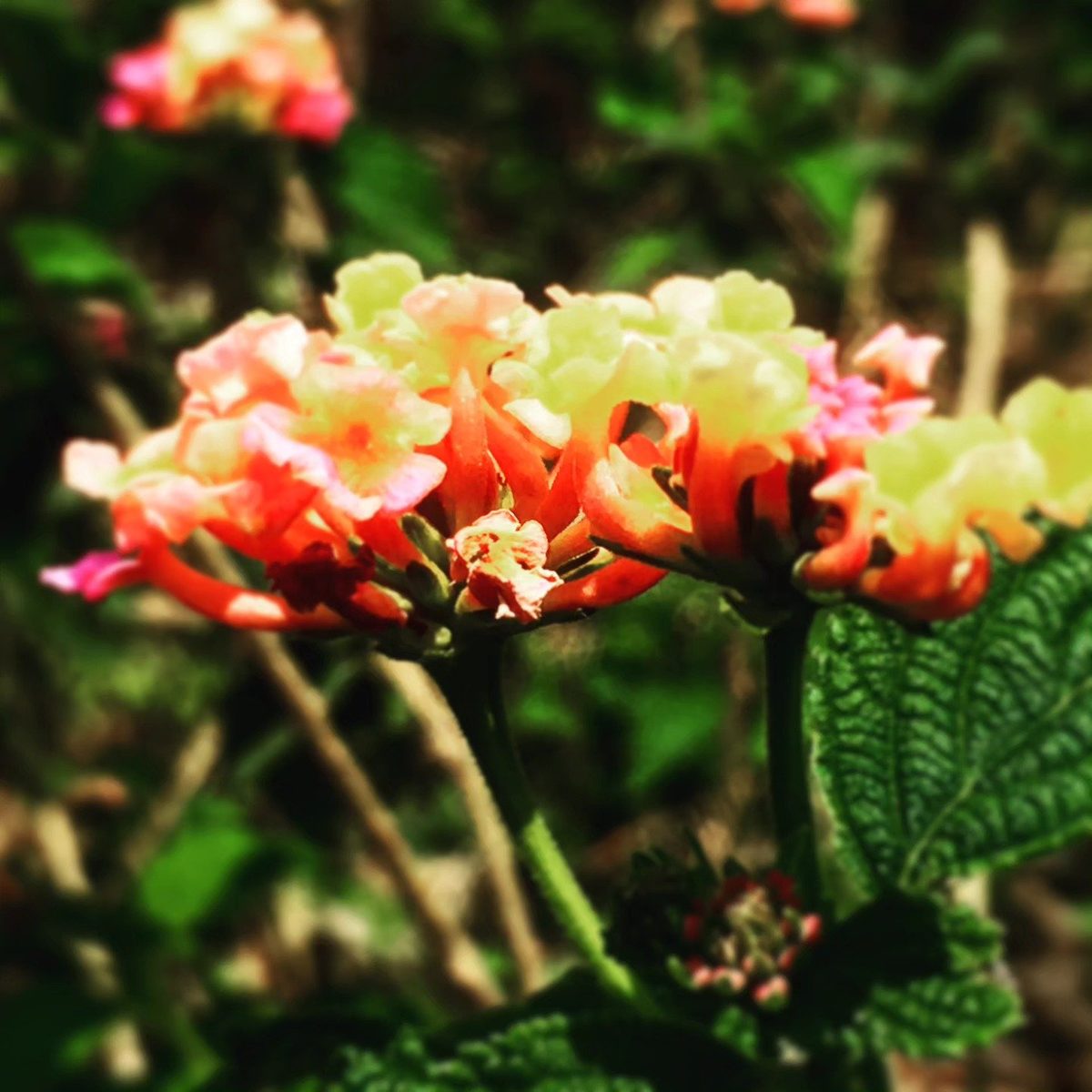
A spray of lantana, coral on the outside and pale yellow at the centre, caught close enough to see the small four-lobed florets stacked into their dome.
Lantana camara arrived in India as a garden plant in the early nineteenth century and escaped. It now covers huge areas of roadside, scrub and forest edge, and it is counted among the worst invasive weeds in the country, smothering native undergrowth and making it harder for forests to regenerate. It is also very good to look at. Each flower head is a tight cluster of small tubular florets, and the florets change colour as they age, so one head can be yellow in the middle and orange or pink round the outside.
I found this clump at the side of a path on a sunny morning. The light came from above and slightly behind, and it caught the paler centres so they almost glowed. I got low, close enough to pick out the separate florets, and focused on the nearest head. The bush behind went to dark green and brown. A second head sat out of focus at the top left, and at the bottom there was a tight bunch of buds, not yet open, still showing red.
Photographer's notes
- Camera
- Phone camera, main lens
- Settings
- f/1.8 · 1/500 s · ISO 50 · 26 mm equiv. (estimated from the image)
- Light
- Strong midmorning sun from above and slightly behind the flowers, warm in colour, backlighting the pale centres against a shaded background.
- Composition
- The two flower heads run in a horizontal band across the middle of the frame, with the largest leaf filling the lower right corner. A blurred second cluster at the top left and the buds below add depth.
- Grid
- Rule of thirds
License this photograph for a website or publication from ₹999 plus GST: licensing terms. The file is 1440 × 1440 pixels.
Prints from ₹499. Order this print on WhatsApp or see every photograph.
